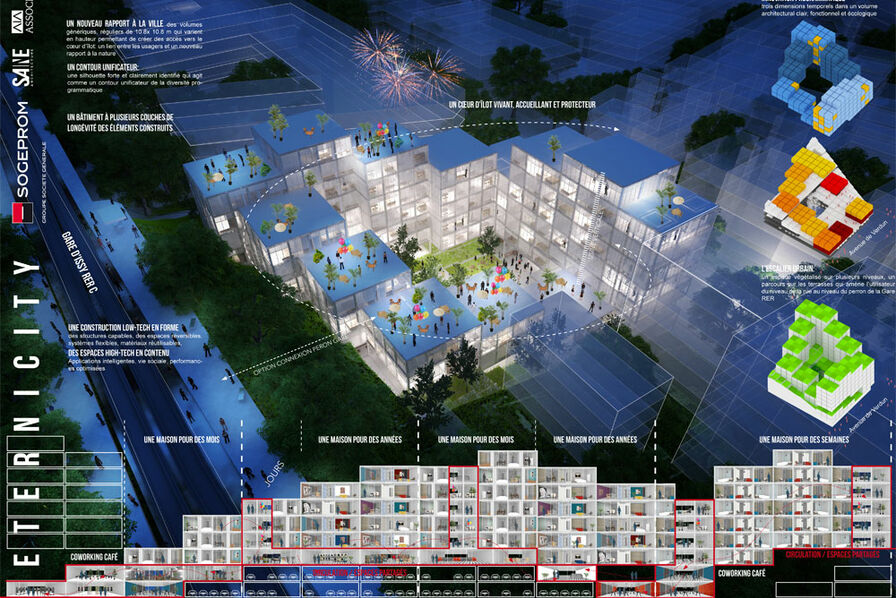
SANE in a team with AIA associés and SOGEPROM is shortlisted for the site ZAC L.Blum Issy-les-Moulineaux for the Inventons la Métropole du Grand Paris competition
using the matryoshka doll’s underlying theme — complex entities understood through simple forms — as a formal guide, the concept uses repetition to create a large system made of easily digestible parts.

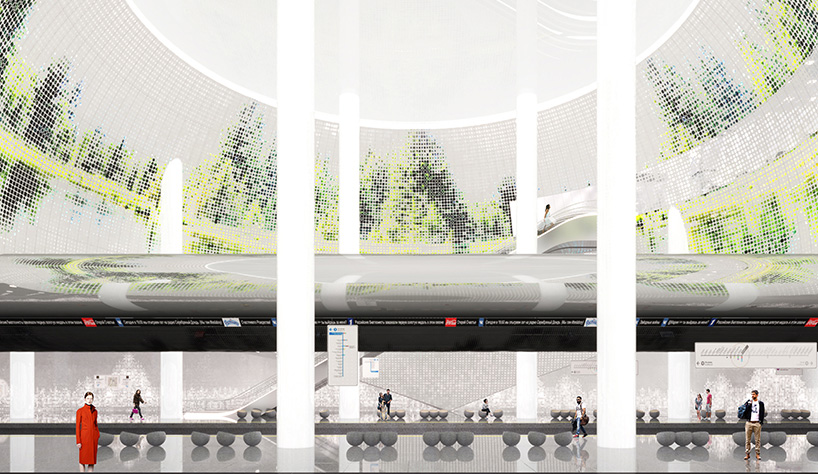
SANE is shortlisted in the Moscow Metro Station International Competition for the architectural design of the Nizhniye Mnevniki MetroStation in Moscow

everal years ago, the ‘preston bus station’ in preston, UK was fighting for its survival. arguments had been lobbied for its destruction, and it seemed as if the building’s demise was imminent. instead of outright demolishing the structure, it was decided instead that an open international competition would be held to repurpose and renovate the massive, 9,000m2 space.

Our Rubik Cube project is the Winner of the Offices category at MIPIM Future Project Awards 2015

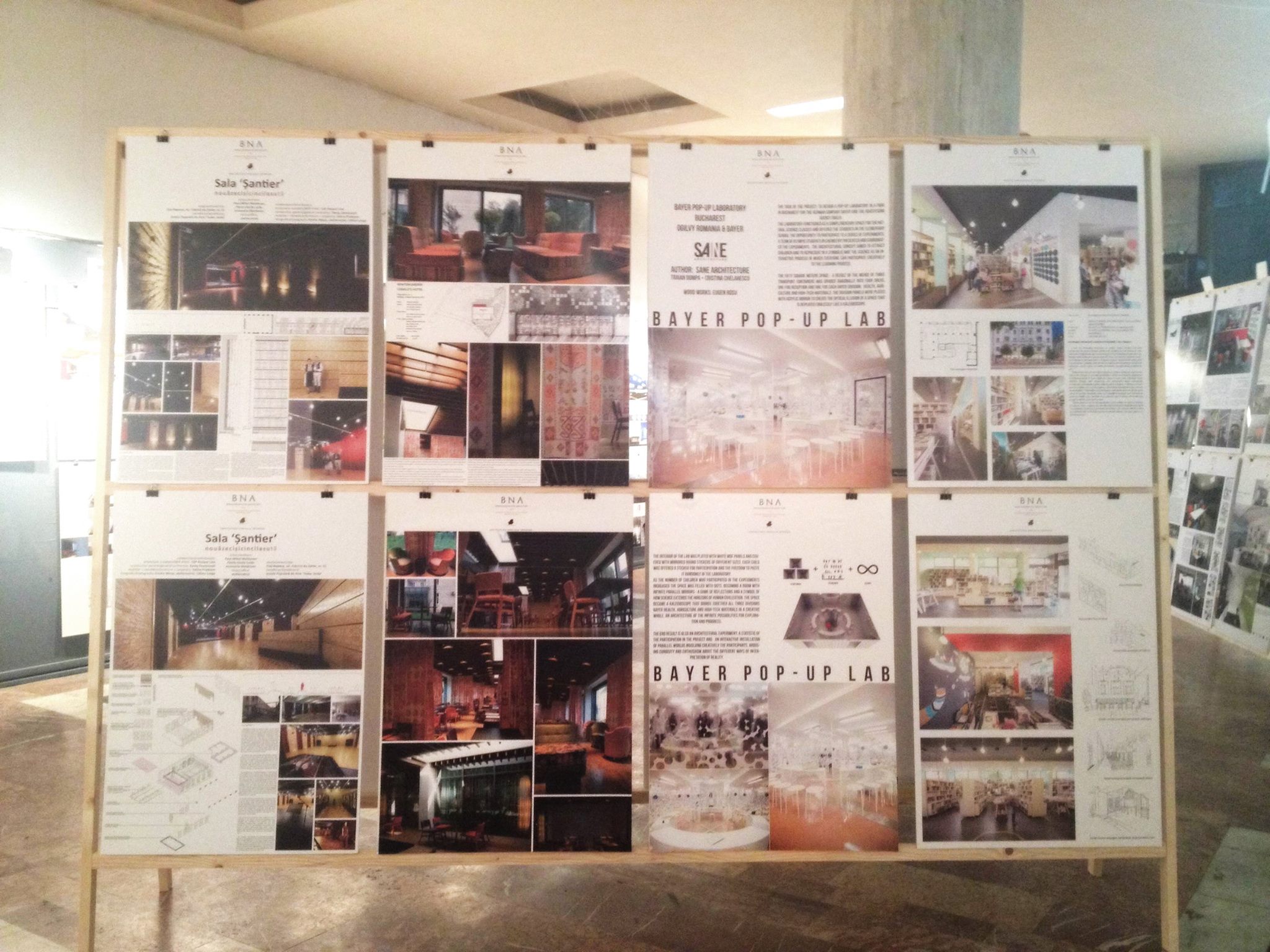
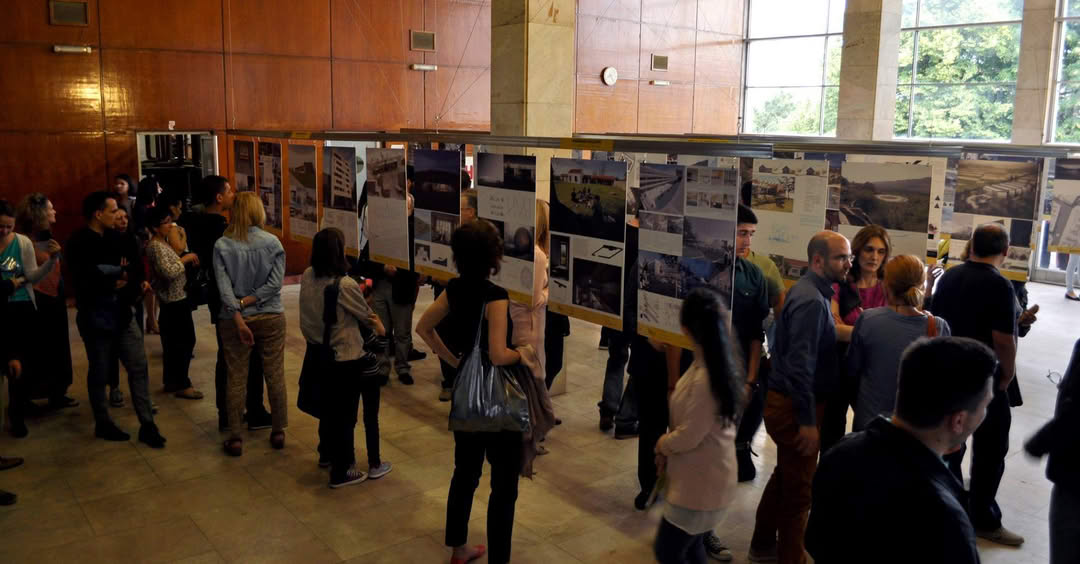
We are pleased to share that our Pop-Up Lab for Bayer has been officially nominated for inclusion in the Bucharest Architecture Biennale 2014. The project will be exhibited at the Center for Architectural Culture in Bucharest from 15 to 30 October.
Designed by SANE architecture in collaboration with Bayer and Ogilvy Romania, the Pop-Up Lab is an innovative temporary structure installed in a public park. Serving as a complementary space for natural science classes, it provided elementary school students the opportunity to engage hands-on with a series of fun experiments.
The 50 m² installation is created by merging three transport containers and subdivided—via a diagonal layout—into four functional zones: a reception area and separate stations representing Bayer’s divisions in health, agriculture, and high‑tech materials. Acrylic mirror panels form an optical kaleidoscope, giving the impression of infinite space. White MDF interiors are adorned with mirrored round stickers of various sizes; each participating child is given a sticker to place anywhere, turning the installation into an evolving, participatory work of art. As more children take part, the interior transforms into a “room with infinite parallel mirrors,” metaphorically representing how science expands human horizons. The installation is both an architectural experiment and a playful interface for discovery, curiosity, and creative interaction with reality.
Being nominated for the Bucharest Architecture Biennale is a testament to the conceptual richness and public engagement embedded in the Pop-Up Lab. The Biennale is a key event in Romania’s architectural calendar, spotlighting forward-thinking ideas and projects that merge playful interaction with design. Having this project displayed at the Center for Architectural Culture offers a unique opportunity to engage the public and professionals alike, fostering dialogue around participatory architecture, educational design, and temporary urban interventions.
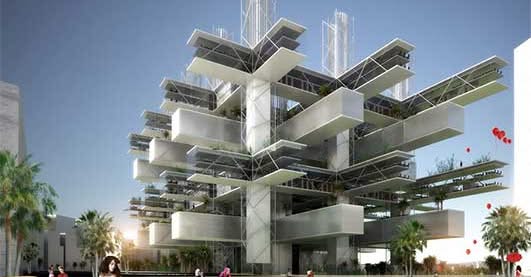
We are delighted to announce that SANE Architecture has been awarded first prize at the Re-Thinking the Future (RTF) Awards 2014 in the Mixed Use Concept category for our proposal for the Taichung City Cultural Center.
The RTF Awards were established to celebrate excellence and innovation in architecture, design, and sustainability on a global scale. With entries from practices and institutions around the world, the awards recognize projects that rethink conventional approaches and propose visionary solutions to contemporary challenges in the built environment.
Our proposal for the Taichung City Cultural Center was conceived as a hybrid civic landmark, combining the functions of a museum, library, and cultural forum within one coherent architectural gesture. The project aimed to redefine the role of cultural institutions in the 21st century, creating a space that is both a repository of knowledge and a vibrant public destination. Its integration of cultural programming with strong urban presence and accessible public spaces reflects our commitment to projects that engage equally with community, context, and innovation.
Receiving this distinction from the RTF Awards 2014 places the project within an international platform of ideas and underlines its relevance in the ongoing discourse on mixed-use cultural architecture. It also reaffirms our dedication to developing proposals that are contextually rooted, socially responsive, and future-oriented.

We are proud to announce that our Museum of Underwater Antiquities project was featured in the July 2014 issue of the German architecture magazine Pulse – Movements in Architecture.
Pulse is an international publication based in Germany, dedicated to documenting and analyzing the latest currents in architectural thought and practice. With a sharp editorial focus on projects that challenge conventions and propose new ways of engaging with contemporary urban and cultural issues, the magazine has become an important voice in the European architectural landscape. Its readership includes architects, urbanists, academics, and cultural practitioners who look to Pulse for a critical yet forward-looking perspective on global architectural production.
The inclusion of the Museum of Underwater Antiquities within the July 2014 issue underscores the project’s relevance beyond its immediate context. The proposal reimagines the museum as a civic and cultural interface, making visible the hidden narratives of underwater archaeology while positioning heritage as an active agent of urban regeneration. Through its design, the project links research, exhibition, and public engagement, envisioning a space where history, community, and innovation intersect.
Being featured in Pulse – Movements in Architecture places the project alongside other international works that push the boundaries of cultural infrastructure and rethink the relationship between architecture and society. For SANE Architecture, this recognition affirms the broader resonance of our work and situates the Museum of Underwater Antiquities in the ongoing dialogue on how museums can evolve into dynamic, context-responsive, and future-oriented civic landmarks.

The pop-up laboratory in Bucharest has been designed by Sane Architecture to attract children and to represent in a symbolic way the science as an interactive process.
The pop-up laboratory in Bucharest has been designed by Sane Architecture to attract children and to represent in a symbolic way the science as an interactive process.
SANE architecture, an experimental studio based in Paris, have recently been recognised in the MIPIM Architectural Review Future Project Awards 2014 for the Taichung City Cultural Centre. The practice, who focus on “researching the Sane and the Insane in architecture”, were tasked with imagining an architecture and an urban space unique to Taiwan’s climate and the culture of Taichung, a cultural library and municipal arts museum that “synergizes” art, education and recreation.
The site is located on the northern end of the Taichung Gateway Park. The project integrates the park landscape to form a key cultural landmark and an entryway gesture into the park. In such a complex environment the architect “proposed a light structure”, with a key concept being the idea of permeability.
Integrating sustainable components was also key to the designers’ ethos. The building produces electricity from wind through the use of an Invelox system. Each one of the fifteen vertical towers will be fitted with an omnidirectional funnel which captures the wind and directs it through a “tapering passageway”, naturally accelerating its flow through the use of several Venturi tubes. “The individual streams of kinetic energy will then drive a single generator that is installed safely and economically at ground level. Integrating sustainable components was also key to the designers’ ethos. The building produces electricity from wind through the use of an Invelox system. Each one of the fifteen vertical towers will be fitted with an omnidirectional funnel which captures the wind and directs it through a “tapering passageway”, naturally accelerating its flow through the use of several Venturi tubes. “The individual streams of kinetic energy will then drive a single generator that is installed safely and economically at ground level.
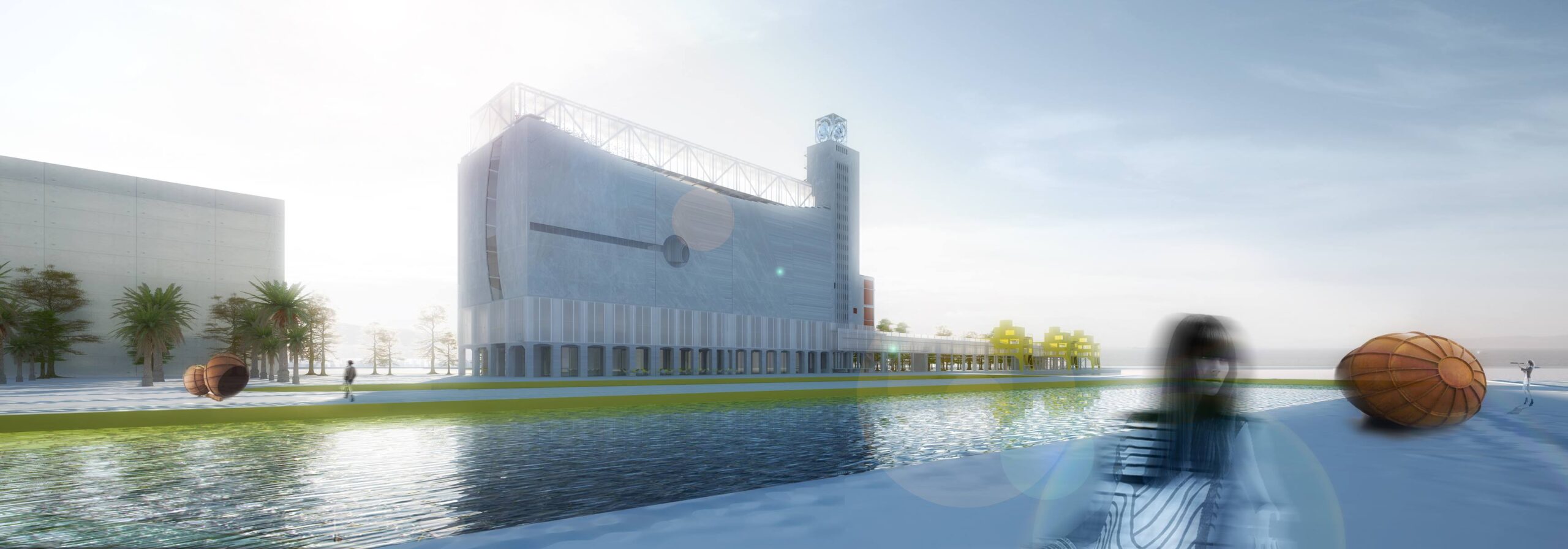
We are pleased to announce that our project, the Museum of Underwater Antiquities, has been featured in issue #123 of Zeppelin Magazine.
The Museum of Underwater Antiquities explores how architecture can act as a mediator between heritage and contemporary urban life. By bringing to the surface artifacts and narratives hidden beneath the sea, the project creates a new type of museum space — one that connects archaeology, public education, and urban regeneration. The design aims to engage both specialists and the general public, offering a layered experience that combines exhibition, research, and civic presence.
Being published in Zeppelin Magazine, one of the most respected platforms for architectural discourse in Romania and the wider region, is a significant recognition. Zeppelin is known for its critical approach to architecture, urbanism, and design, consistently showcasing projects that push boundaries and open new debates. Its readership includes architects, designers, cultural professionals, and decision-makers, making it an influential voice in shaping contemporary architectural culture.
The inclusion of the Museum of Underwater Antiquities in issue #123 affirms the project’s relevance within current discussions about the role of museums, the preservation of heritage, and the capacity of architecture to engage meaningfully with history while projecting it into the future.
SANE architecture recognized for taichung city cultural center proposal
paris-based studio sane architecture has been awarded highly commended for their proposal of the ‘taichung city cultural center’ at the 2014 MIPIM architectural review future project awards. recognized in the cultural regeneration category, the brief called for an urban space that combines a public library and municipal fine arts museum into one area, bringing art, education and recreation together. located on the northern end of taichung gateway park, the project also integrates into its surrounding landscape, becoming a key landmark and entryway for the site.
proposing a lightweight structure, the key concept of the design is permeability, creating a complex urban environment that serves the museum and public library programs. offering a mix between the natural and built form, a sustainable approach has been adopted with the building able to produce electricity from the energy of the wind through the use of an invelox system, different of conventional wind turbines.
We are honored to announce that our Taichung City Cultural Center project was awarded Highly Commended in the Cultural Regeneration category of the 2014 MIPIM Architectural Review Future Projects Awards.
The MIPIM Future Projects Awards, organized annually by The Architectural Review during the MIPIM real estate fair in Cannes, are widely regarded as one of the most important international distinctions for unbuilt and visionary architecture. Unlike awards dedicated to completed buildings, these prizes focus on the ideas, concepts, and strategies that anticipate the future of the built environment. They celebrate architectural ambition at its most daring stage — when a project is still a proposal — and acknowledge the role of design in addressing pressing social, cultural, and environmental challenges.
Since their establishment in 2002, the awards have brought international visibility to groundbreaking projects by some of the world’s most respected practices, including Zaha Hadid Architects, Foster + Partners, BIG – Bjarke Ingels Group, OMA, Rogers Stirk Harbour + Partners, and Stefano Boeri Architetti. Winning or being commended in these categories places a project in dialogue with the most influential ideas shaping global architecture.
Our recognition in the Cultural Regeneration category highlights the ambition of the Taichung City Cultural Center project to create not only a landmark building, but also a civic space deeply integrated into the urban fabric. The proposal sought to combine cultural programming, architectural innovation, and public accessibility, while reinforcing the city’s role as a hub for creativity and knowledge.
This commendation affirms our commitment to designing projects that resonate beyond their immediate context, engaging with broader debates on urban transformation, sustainability, and cultural identity.
SANE Architecture Offers Permeability Through Cantilevered Volumes For Taichung
This strong and straightforward design proposal comes from based SANE Architecture studio. Their design for Taichung City Cultural Center involve a courageous environmental approach and it challenges the common notion of a cultural center in general. However, the program objectives were ambitious – the cultural center had to combine a public library and municipal fine arts museum—the cultural flagships of a city—into one area, synergizing art, education and recreation in one location. Besides serving the public functions of reader service, exhibition and guided tour, the two institutions had to be also each fulfill policies and objectives related to reading promotion, artistic development and collection and research of artifacts. The competition required the design which would, as a showcase of Greater Taichung’s distinct cultural ambiance exemplify her intelligent residents, history and urban identity.
As a response to competition requirements, SANE Architecture proposed light structure with the key idea of permeability. Their proposal offered innovative mix between natural and artificial and a new landmark for the area. The building combines the library and museum functions with the park, as a third one, therefore the unique public experience is offered to the visitor.
Two main functions share the lobby at the ground floor, but are housed in two separate volumes. The lobby can serve as a temporary exhibition space. The sustainable approach is a key feature – the building is environmentally friendly and naturally ventilated. It produces electricity from the energy of the wind. All fifteen vertical towers will serve to this purpose, due to having omni-directional funnel integrated within.
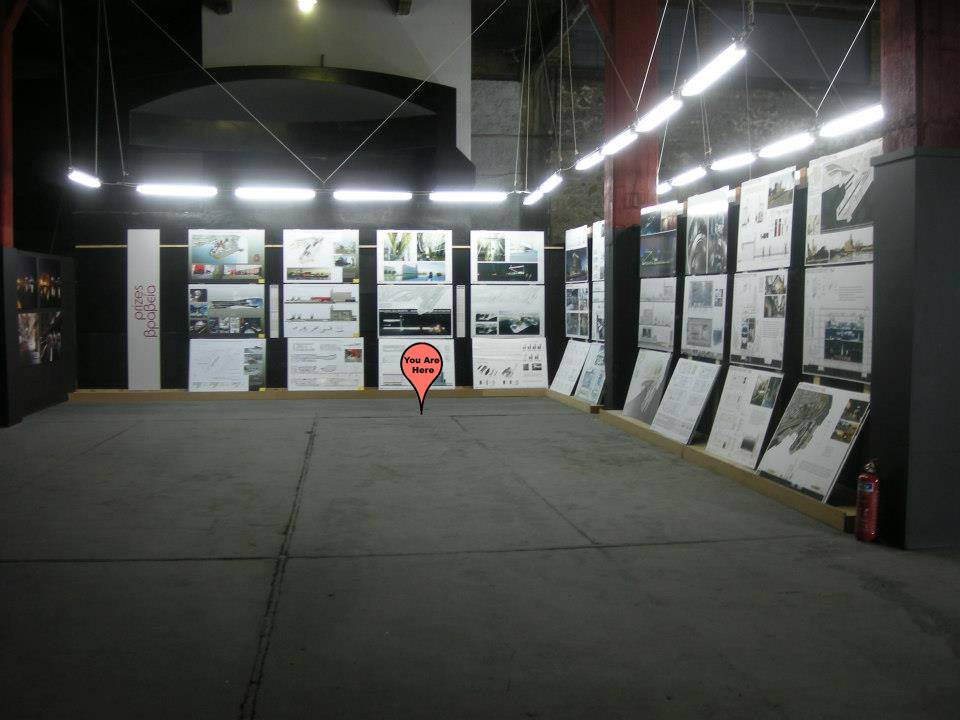
the SILO project at the award ceremony #MuseumOfUndewaterAntiquities
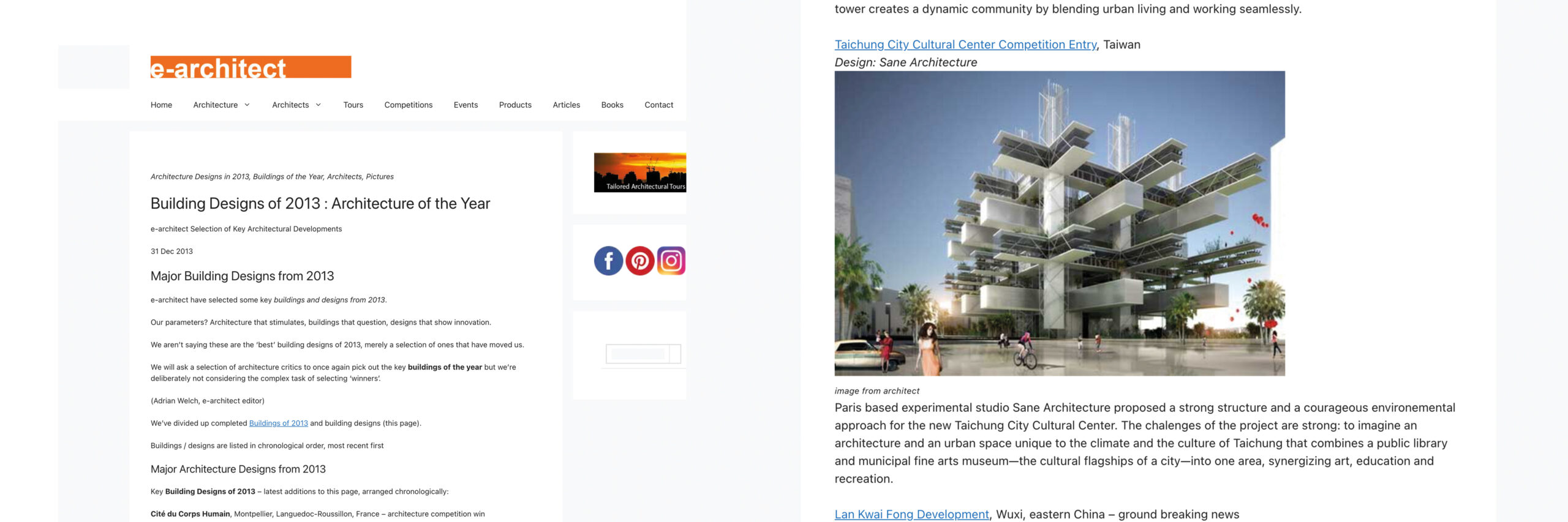
The Taichung City Cultural Center by #SANEarchitecture selected amongst the key buildings and designs from 2013 by e-architect.co.uk
Paris based experimental studio Sane Architecture proposed a strong structure and a courageous environemental approach for the new Taichung City Cultural Center. The chalenges of the project are strong: to imagine an architecture and an urban space unique to the climate and the culture of Taichung that combines a public library and municipal fine arts museum—the cultural flagships of a city—into one area, synergizing art, education and recreation.
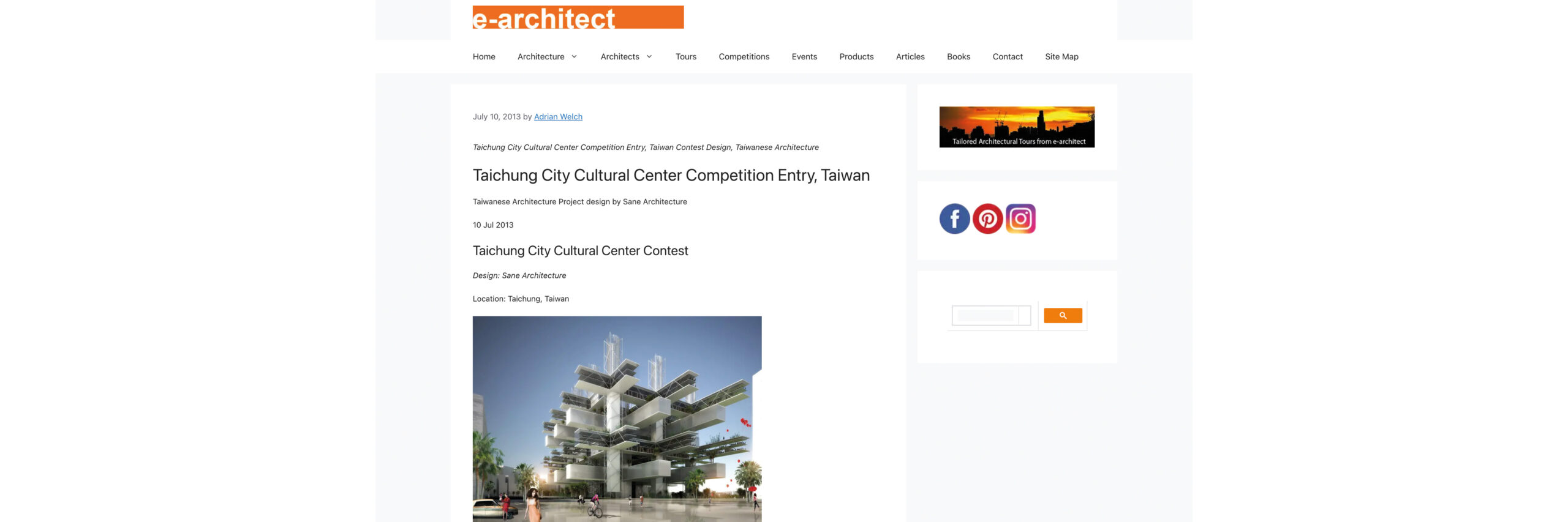
Paris based experimental studio Sane Architecture proposed a strong structure and a courageous environemental approach for the new Taichung City Cultural Center. The challenges of the project are strong: to imagine an architecture and an urban space unique to the climate and the culture of Taichung that combines a public library and municipal fine arts museum—the cultural flagships of a city—into one area, synergizing art, education and recreation.
Taichung City Cultural Center Competition Entry by Sane Architecture
The site is located on the northern end of Taichung Gateway Park. The project will integrate the park landscape to form a key cultural landmark and an entryway gesture into the park. In such a complex environement we propose a light structure, having as a key concept the ideea of PERMEABILITY, a complex urban space hosting the museum and the public library programs. The TCC will be an innovative mix between the natural and the artificial with a strong environemental approach, a new landmark for the area enhancing Taichung urban identity.
SANE architecture for Taichung City Cultural Center on e-architect
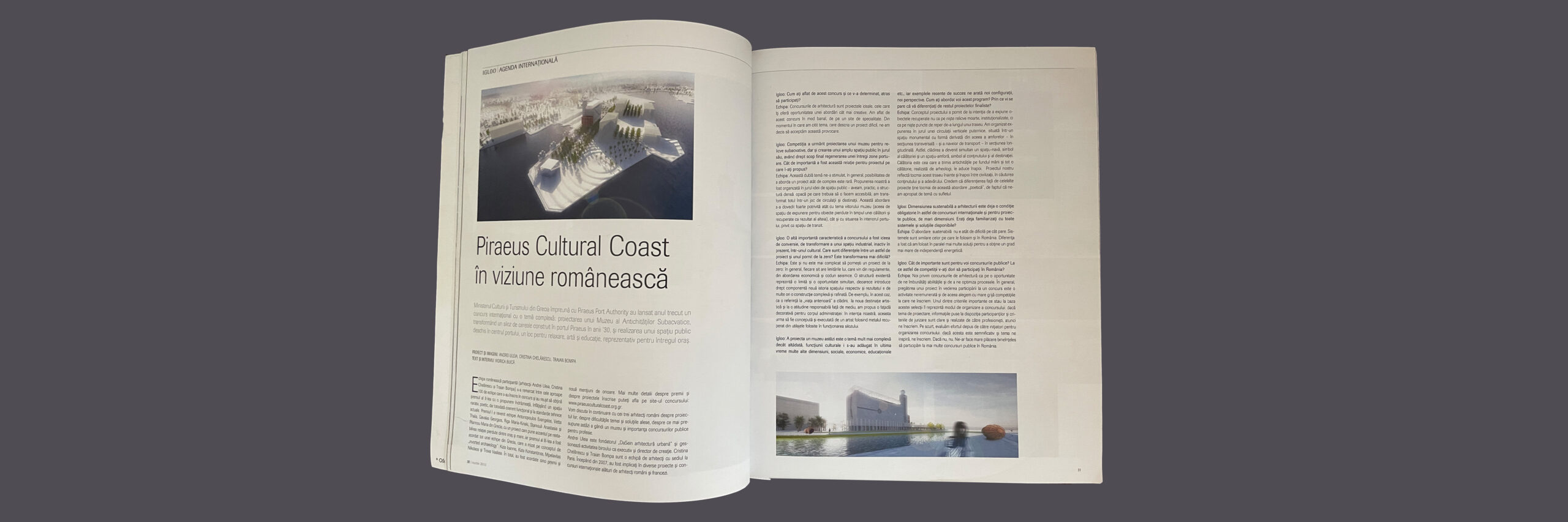
Three pages in the march issue of igloo habitat & architecture magazine on the SILO project.
Thank you igloo !
Andrei Uleia (center in the photo), Cristina Chelarescu (left), and Traian Bompa (right) were recently awarded in an international architecture competition in Greece. wall-street.ro spoke with the three about the significance of these international prizes, as well as about the evolution of the Romanian “market,” in the context of the sharply reduced number of new projects.
Andrei Uleia is the founder of DaSein Architecture and Urbanism and manages the office’s activity as executive and design director. DaSein is known for the Upground real estate project, the largest transaction on the local market, purchased in 2008 for €340 million.
Cristina Chelarescu and Traian Bompa are a team of architects based in Paris. Since 2007, they have been involved in various projects and international competitions alongside Romanian and French architects.
What does such an international award mean for an architect?
“In the practice of architecture, it is considered first and foremost a recognition of creativity,” says Cristina Chelarescu, adding that it is equally a way to measure and reward the level of performance achieved through very good team organization and through a coherent approach to the given task from a functional, structural, aesthetic, and economic standpoint.
Why are these international competitions important for an architect?
“The variety and complexity of the topics in architecture competitions are far greater than those encountered in office practice,” says Traian Bompa.
Wall Street Romania interview on architecture and architecture competitions
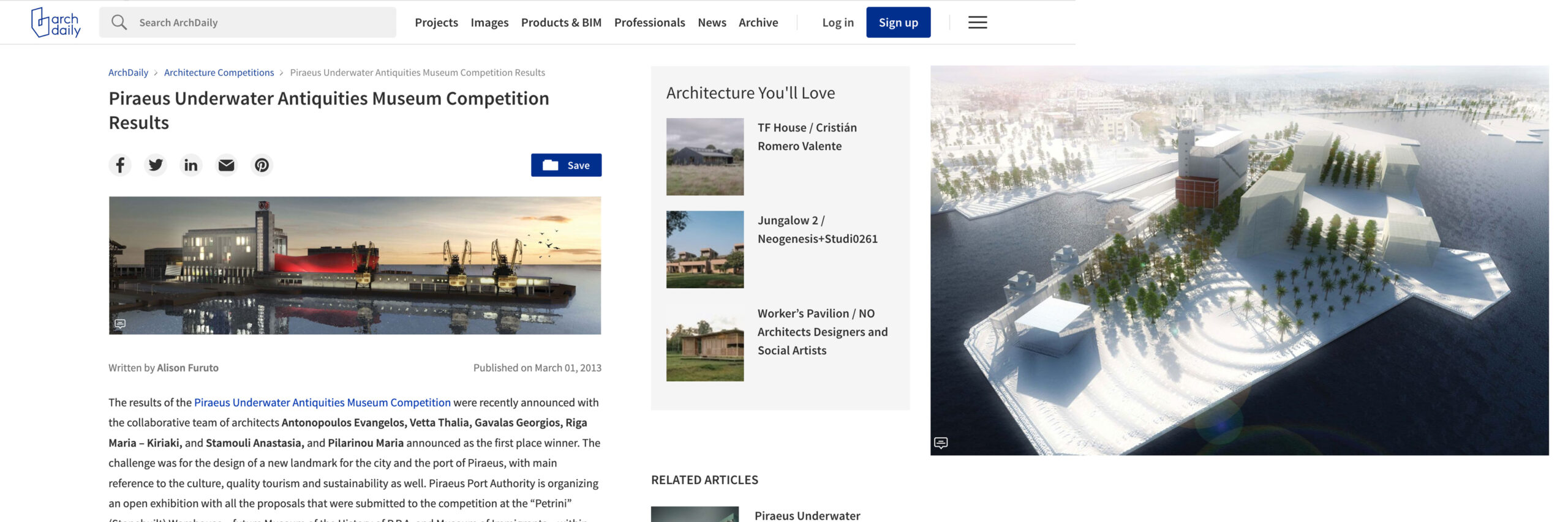
The results of the Piraeus Underwater Antiquities Museum Competition were recently announced with the collaborative team of architects Antonopoulos Evangelos, Vetta Thalia, Gavalas Georgios, Riga Maria – Kiriaki, and Stamouli Anastasia, and Pilarinou Maria announced as the first place winner. The challenge was for the design of a new landmark for the city and the port of Piraeus, with main reference to the culture, quality tourism and sustainability as well. Piraeus Port Authority is organizing an open exhibition with all the proposals that were submitted to the competition at the “Petrini” (Stonebuilt) Warehouse – future Museum of the History of P.P.A. and Museum of Immigrants – within the zone of the Cultural Coast. The opening of the exhibition is planned on 28th March 2013.
Second Place: Uleia Andrei, Traian Bompa, Cristina Chelarescu
Team’s Description: The architectural concept is based on the intention to expose the objects recovered from the sea
bed not as relics, some meaningless dead objects but as objects partially recovering the original meaning. The museum is structured around a strong vertical gesture, situated in a monumental space derived from ancient amphorae as well as the shape of ships. The building is simultaneously a ship that develops and supports the idea of the journey and an amphora built a symbol for the idea of content. The journey is not only the one that brought the antiquities to sea but also the one that the archeologists take in order to discover them. It is a trip back and forth between civilizations, in search of content, of truth. The duality of the architectural concept emphasizes the initial functional duality: a building for grain storage and a component of a transport network.